





:quality(70)/cloudfront-us-east-1.images.arcpublishing.com/cmg/BPEI2QQ76SHPPOW6X6A6WHEGX4.jpg "Hong Kong’s M+ museum opens amid censorship controversy – KIRO 7 News Seattle")














:quality(70)/cloudfront-us-east-1.images.arcpublishing.com/cmg/GLQND2AXQQO2G4O6Q7SICYRJ4A.jpg "Blinken headed to Africa to address various crises – KIRO 7 News Seattle")

It’s Fourth of July weekend, and Americans enjoying some sorely missed freedoms are expected to travel and gather for cookouts and fireworks in numbers not seen since pre-pandemic days. But some question if the country is rushing into celebrations, especially since less than half the country is fully vaccinated, and the highly contagious delta variant is threatening new outbreaks.
And big questions around the virus’ origin still remain; though as the World Health Organization draws up plans for the next phase of its probe of how the pandemic started, numerous experts say the political tensions between the U.S. and China make it impossible for a WHO investigation to find credible answers.
We’re updating this page with the latest news about the COVID-19 pandemic and its effects on the Seattle area, the U.S. and the world. Click here to see previous days’ live updates and all our other coronavirus coverage, and here to see how we track the daily spread across Washington and the world.
Show caption
4:00 pm
Iran reimposes virus restrictions as delta variant spreads

Show caption
TEHRAN, Iran (AP) — Iran announced Sunday it was reimposing coronavirus restrictions on major cities, as the spread of the highly contagious delta variant spurs fears of another devastating surge in the nation.
After over a year battling the worst virus outbreak in the Middle East, Iran ordered the closures of non-essential businesses in 275 cities, including the capital of Tehran.
The shutdown of all public parks, restaurants, dessert shops, beauty salons, malls and bookstores applies to the country’s “red” and “orange” zones, or municipalities ranked as having an elevated risk of COVID-19.
The government said it was also imposing a travel ban between cities with high infection rates.
Read the full story here.
—The Associated Press
3:00 pm
Big cats, bears, ferrets get COVID-19 vaccine at Oakland Zoo

Show caption
OAKLAND, Calif. (AP) — A San Francisco Bay Area zoo is inoculating its big cats, bears and ferrets against the coronavirus as part of a national effort to protect animal species using an experimental vaccine.
Tigers Ginger and Molly were the first two animals at the Oakland Zoo to get the vaccine this week, the San Francisco Chronicle reported Saturday. The doses were donated and developed by veterinary pharmaceutical company Zoetis in New Jersey.
Alex Herman, vice president of veterinary services at the zoo, said none of the animals have gotten the virus, but they wanted to be proactive. Tigers, black and grizzly bears, mountain lions and ferrets were the first to receive the first of two doses. Next are primates and pigs.
In a press release, she said the zoo has used barriers for social distancing and staff have worn protective gear to protect susceptible species. “We’re happy and relieved to now be able to better protect our animals with this vaccine,” she said.
Read the full story here.
—The Associated Press
2:00 pm
Indonesia hospital: 33 COVID patients die amid oxygen outage

Show caption
YOGYAKARTA, Indonesia (AP) — Dozens of coronavirus patients died after a public hospital on Indonesia’s main island of Java ran out of liquid oxygen amid a nationwide surge in COVID-19 cases, a hospital official said Sunday.
At least 33 patients with severe coronavirus infections died after the central supply of liquid medical oxygen ran out late Saturday at Dr. Sardjito General Hospital in Yogyakarta city due to delays from suppliers over the weekend, said hospital spokesman Banu Hermawan.
The oxygen shortage in the city’s largest hospital was due to an increase in patients arriving in deteriorating condition, Hermawan said.
At least 63 virus patients died during treatment for COVID-19 in the hospital since Saturday — 33 of them during the period when the central liquid oxygen supply ran out — even though the hospital switched to using oxygen cylinders during the outage, he said. Medical oxygen comes in liquid and compressed forms.
Read the full story here.
—The Associated Press
1:00 pm
Tokyo elects assembly amid pandemic fears over Olympics

Show caption
TOKYO (AP) — Voters in Japan’s capital are electing the Tokyo city assembly amid worries about health risks during the Olympics, opening in three weeks, as coronavirus cases continue to rise.
In Sunday’s balloting, 271 candidates are vying for 127 seats. Eligible voters total 9.8 million people in the megacity with a population of nearly 14 million.
Public opinion surveys show about 60% of respondents want the Games canceled or postponed again. Behind the fears is the lagging vaccination rollout, with only about 10% of the population fully vaccinated.
Exit polls by public broadcaster NHK TV showed a tight race between Tokyo Gov. Yuriko Koike’s Tomin First party and the ruling Liberal Democrats, the party of Prime Minister Yoshihide Suga.
Read the full story here.
—The Associated Press
12:15 pm
Race is on to get rental assistance out to avert evictions

Show caption
BOSTON (AP) — More than $7,000 behind on rent, Tyesha Young had hoped a program in Louisiana would bail her out and allow her family to avert eviction in the coming weeks.
But the 29-year-old mother of two from Jefferson Parish is still waiting to hear whether any of the $308 million available from the state for rental assistance and utility payments will give her a lifeline. She applied for money last year but never heard anything. She is waiting to hear on her latest application.
The federal money was divided between a Louisiana statewide program and its largest parishes. Neither has gone well. The state has paid out $10.5 million out of $147 million, while Jefferson Parish has only distributed $1.4 million out of $12.9 million. The parish replaced the company overseeing the program after only $236,000 was handed out by May.
“Where are we going to go?” asked Young, who lost her hospital job during the pandemic and now must stay home to care for her 7-month-old.
Read the full story here.
—The Associated Press
11:30 am
Full Wimbledon crowds allowed from quarterfinals to finals
WIMBLEDON, England (AP) — Crowds at Wimbledon’s Centre Court and No. 1 Court can increase to 100% capacity for the singles quarterfinals through the end of the tournament.
The All England Club said Sunday that will mark “the first full outdoor stadiums at a sporting event” in Britain since the start of the coronavirus pandemic last year.
Wimbledon was canceled in 2020 because of the COVID-19 outbreak, the first time in 75 years that the oldest Grand Slam tennis tournament was not held.
The club said the rise from what has been limited to 50% full crowds at the two main arenas comes after “the successful staging of the first week of The Championships” and with government approval.
Read the full story here.
—The Associated Press
10:45 am
99% of U.S. COVID deaths are unvaccinated people, Fauci says
WASHINGTON — America’s top infectious disease expert says about 99.2% of recent COVID-19 deaths in the United States involved unvaccinated people. And Dr. Anthony Fauci says “it’s really sad and tragic that most all of these are avoidable and preventable.”
He tells NBC’s “Meet the Press” it’s frustrating “where you have a formidable enemy” in the coronavirus and “yet we do have a countermeasure that’s highly, highly effective. And that’s the reason why it’s all the more sad and all the more tragic why it isn’t being completely implemented in this country.”
Fauci cites the reasons for opposition to the vaccine by some Americans, whether it’s “ideological” or whether some “are just fundamentally anti-vax or anti-science.”
He says the country does “have the tools to counter” the pandemic and he’s asking people to “put aside all of those differences and realize that the common enemy is the virus.”
Fauci notes the United States is “very fortunate” that it has “enough vaccines to vaccinate essentially everybody in the country. And there are people throughout the world who would do anything to get vaccines.”
The United States has registered over 605,000 deaths in the pandemic, the highest national toll in the world.
—The Associated Press
10:45 am
A Cannes (sans kisses) to reawaken our romance with movies

Show caption
The Palais des Festivals, the central hub of the Cannes Film Festival, a massive bulwark of filmmaker-named halls and pristine movie screens, is about as close as you can get to a cinema temple. To enter, you must ascend red-carpeted steps.
But in the past 16 months, Cannes’ Palais hasn’t been home to the movie frenzy it hosts annually. Last year’s festival was postponed, then canceled. The Palais, instead, was lined with hospital beds in the early months of the pandemic. Earlier this year, it was turned into a mass-vaccination “Vaccinodrome.”
On Tuesday, the Cannes Film Festival, delayed from May to July, will finally open its doors for its 74th and maybe most critical edition. Its famed red carpet will again flood with stars. The screens will be relit. And, maybe, the movies will rekindle some of the romance and grandeur that went dormant this past pandemic year.
“It’s a kind of pilgrimage or Mecca, and even more so this year,” says Mark Cousins, the Scotland-based filmmaker whose “The Story of Film: a New Generation” will premiere opening day on the Cannes beach. In the Palais, Leos Carax, a director whose freewheeling fictions reflect real movie dreams, will debut his anticipated “Annette,” a musical with Adam Driver and Marion Cotillard.
Read the full story here.
—The Associated Press
10:00 am
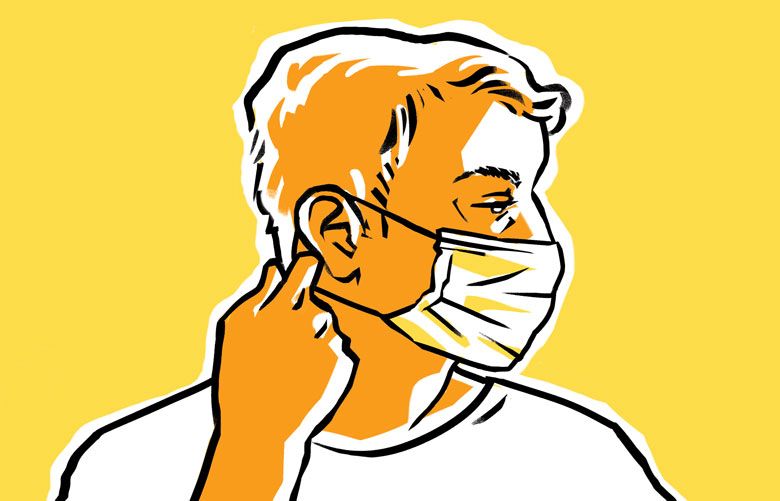
England may soon abandon mask requirements, minister says
LONDON (AP) — England may soon abandon legal requirements for wearing masks, a government minister said Sunday as the nation waits for U.K. Prime Minister Boris Johnson to announce plans for easing COVID-19 measures.
Johnson is expected in the next few days to update England on “freedom day’’ — the plan to scrap the remaining restrictions on business and social interaction on July 19. British media widely reported that many requirements, including mask wearing, would also end.
“We are going to, I think, now move into a period where there won’t be legal restrictions — the state won’t be telling you what to do — but you will want to exercise a degree of personal responsibility and judgment and so different people will come to different conclusions on things like masks,’’ housing minister Robert Jenrick told Sky News. “The prime minister will set out more details on the national policy on some of those restrictions in the coming days.”
Some doctors have expressed concern about further easing of restrictions as infection rates rise, largely because of the more transmissible delta variant. Despite the jump in new infections, there hasn’t been an equivalent increase in hospitalizations and deaths, emboldening government ministers who believe Britain must learn to live with the virus.
Read the full story here.
—The Associated Press
9:15 am
Biden sees virus ‘independence,’ but COVID takes no holiday

Show caption
WASHINGTON (AP) — After nearly six months in office, grappling with a pandemic every step of that way, President Joe Biden was determined to party.
“This is a holiday weekend,” Biden declared on Friday as he parried journalists’ “negative” questions about the ongoing U.S. troop withdrawal from Afghanistan, “I’m going to be celebrating it.”
Biden wants Americans to celebrate too, after enduring 16 months of disruption in the pandemic and more than 605,000 deaths. The White House encouraged gatherings and fireworks displays all around the country to mark — as though ripped from a Hollywood script — the nation’s “independence” from the virus.
And there is much to cheer: Cases and deaths from COVID-19 are at or near record lows since the outbreak began, thanks to the robust U.S. vaccination program. Businesses and restaurants are open, hiring is picking up and travel is getting closer to pre-pandemic levels.
Read the full story here.
—The Associated Press
8:29 am
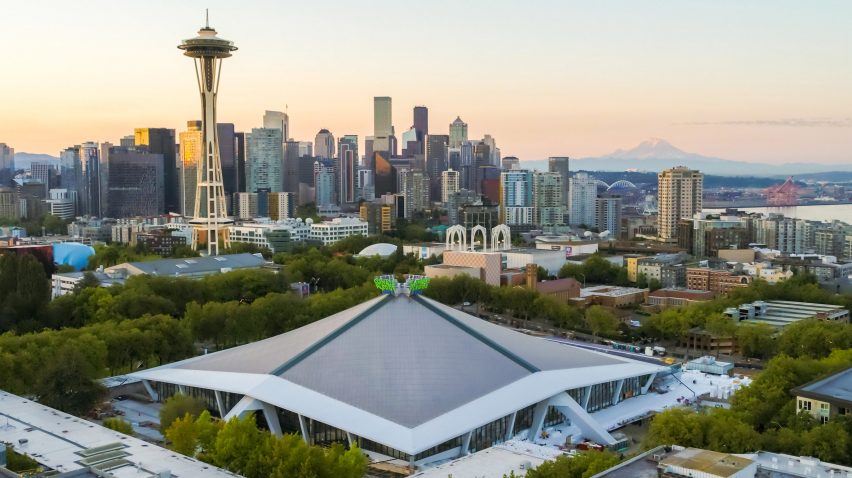
How will Seattle’s next mayor rebuild the economy after COVID?

Show caption
In late 2001, as then-Mayor-elect Greg Nickels prepared to take office, Seattle was sliding into a deepening economic crisis. With global travel hammered by the Sept. 11 terrorist attacks, the incoming administration anticipated major hits to tourism and more layoffs at Boeing, then the Seattle area’s biggest employer.
Although Nickels had campaigned heavily on transit issues, his first-term priorities quickly expanded. “It became very clear that the economy, and trying to get people back to work, would be front and center,” Nickels recalls.
Two decades later, Seattle is choosing a mayor for whom a main priority will be guiding the city from another economic crisis.
It’s a tall order. Although Seattle’s economy has rebounded substantially from the depths of pandemic, a full recovery could be a year or more away, thanks in part to lingering damage from the pandemic. But the new mayor will also have to navigate deep political disagreements over the best way to revive the economy, or even what a “recovered” economy should look like.
Read the full story here.
—Paul Roberts
Seattle Times staff & news services