




:quality(70)/cloudfront-us-east-1.images.arcpublishing.com/cmg/BPEI2QQ76SHPPOW6X6A6WHEGX4.jpg "Hong Kong’s M+ museum opens amid censorship controversy – KIRO 7 News Seattle")













:quality(70)/cloudfront-us-east-1.images.arcpublishing.com/cmg/GLQND2AXQQO2G4O6Q7SICYRJ4A.jpg "Blinken headed to Africa to address various crises – KIRO 7 News Seattle")

Seattle’s new Climate Pledge Arena is hardly subtle with its message.
As they walk through the south entrance, visitors will see a single-story digital waterfall that spills through a wooded scene above the atrium escalators. Around 8,500 plants from 24 species are exhibited on a “living wall” along the west hall of the new arena (the plants are rooted in recycled plastic and have their own team of gardeners). Hockey players will skate on rainwater that is drained from the roof, filtered, and then frozen to create the playing surface (a detail almost every team representative is happy to share).
This 740,000-square-foot hockey palace – slated to be the first carbon-free arena in the United States – is one of the nation’s most ambitious green building projects, priced at $ 1.15 billion. And neither the executives of the team nor the interior design of the building shy away from it.
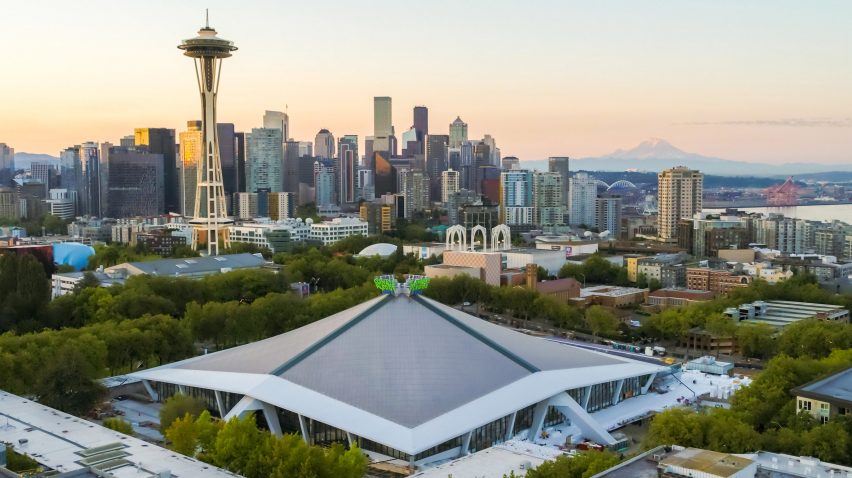
The 41 million pound roof on Climate Pledge Arena was originally built for the 1962 Seattle World’s Fair. During the recent renovation work, workers separated the roof from its supporting structure, held it in place with temporary steel supports, and dug deeper to expand the arena’s footprint.Evan Bush / NBC News
The goal: No fossil fuels (achieved), no single-use plastic by 2024 and little to no waste.
The Zambonis are electric, the cutlery is made of bamboo and the rubbish bins – yes, they still have them – aren’t long in the hall if everything goes according to plan.
Machines and paintbrushes purred across the joinery on Wednesday as workers put the finishing touches on the building that will host the Seattle Kraken’s first home game in the NHL on Saturday night. Kitchen appliances such as deep fryers, which were held in the port due to the global shipping crisis, were still waiting to be installed.
The arena’s climate promises are also in progress. An offsite project for the generation of renewable energy in cooperation with the local energy supplier is still in the planning phase. Employees are only just beginning to calculate the costs – in emissions – of fan participation and travel to the games that arena operators want to cover by purchasing carbon offsets that invest in environmental projects.
Team and arena executives hope that their lofty ambitions and the attention with which they seek to promote them will overcome skepticism and start a green building movement in emissions stadiums across the country.
Buildings are responsible for about a third of US emissions and are the top CO2 reduction targets.
Rob Johnson, vice president of sustainability and transportation for the Seattle Kraken and Climate Pledge Arena, will be responsible for calculating the cost – in carbon emissions – of attending concerts, Seattle Kraken hockey games, and Seattle Storm basketball games. After calculating the travel, food and merchandise costs among fans, Johnson will buy carbon offsets to offset the arena’s climate impact. Evan Bush / NBC News
“It’s a moral imperative,” said Rob Johnson, vice president of sustainability and transportation for the Seattle Kraken and Climate Pledge Arena, adding that a full and transparent record of the arena’s carbon footprint will be public. “We hope this will show the cynics that we really mean business.”
Reuse, reduce
The idea of making the arena climate-neutral began at the very top – with the roof of the building.
The roof was designed for the 1962 World’s Fair and once covered the KeyArena that hosted the WNBA’s Seattle Storm and once hosted the NBA’s SuperSonics. But by 2017 the city-owned building had fallen into disrepair.
Seattle called for redevelopment offers in the public debate and sought private money to beautify the arena, rent the space, and attract new professional sports franchises.
One difficulty: the listed roof had to remain in place. Whoever took on the project had to get 44 million pounds of sloping concrete and steel. And in order to accommodate modern professional sport, the relatively small arena would have to grow.
The solution – a privately funded project led by Oak View Group, a sports and entertainment development and management company – would require a feat of engineering.
Workers cut through the concrete pillars and held up the roof with 72 makeshift steel pillars.
“It was on stilts,” said Ken Johnsen, the project’s site manager.
Workers then excavated about 600,000 cubic feet of earth to increase the arena footprint before reconnecting the pillars and building the bowl.
Rebuilding an arena is one of the most carbon-intensive construction projects, said Kate Simonen, a professor and chair of the architecture department at the University of Washington, who was not involved in the project.
Holding up a structure and maintaining lines of sight across a bowl requires large spans that require more concrete and steel – more carbon.
“Reusing an existing facility is the first and best thing you can do from a material carbon perspective,” said Simonen, who also runs the Carbon Leadership Forum, a nonprofit group that aims to reduce carbon in building materials . “The more we can do to evaluate and value what already exists, the better we will achieve the climate goals.”
According to Johnson, the rescue of the historic roof received enough building materials to build an entire football stadium today. It also got the project off the ground to try something new.
Amazon’s commitment
A partnership with Amazon – a company with an annual global carbon footprint that is roughly equivalent to nearly two-thirds of Washington state’s greenhouse gas emissions according to emissions statistics – has fueled the arena’s green dreams.
The Seattle-based company, rocked by protests from environmental activists and criticism from employees about climate change, bought the arena naming rights to promote its new public pledge to achieve net-zero carbon by 2040.
The arena operators and Amazon decided that the building should receive this award immediately.
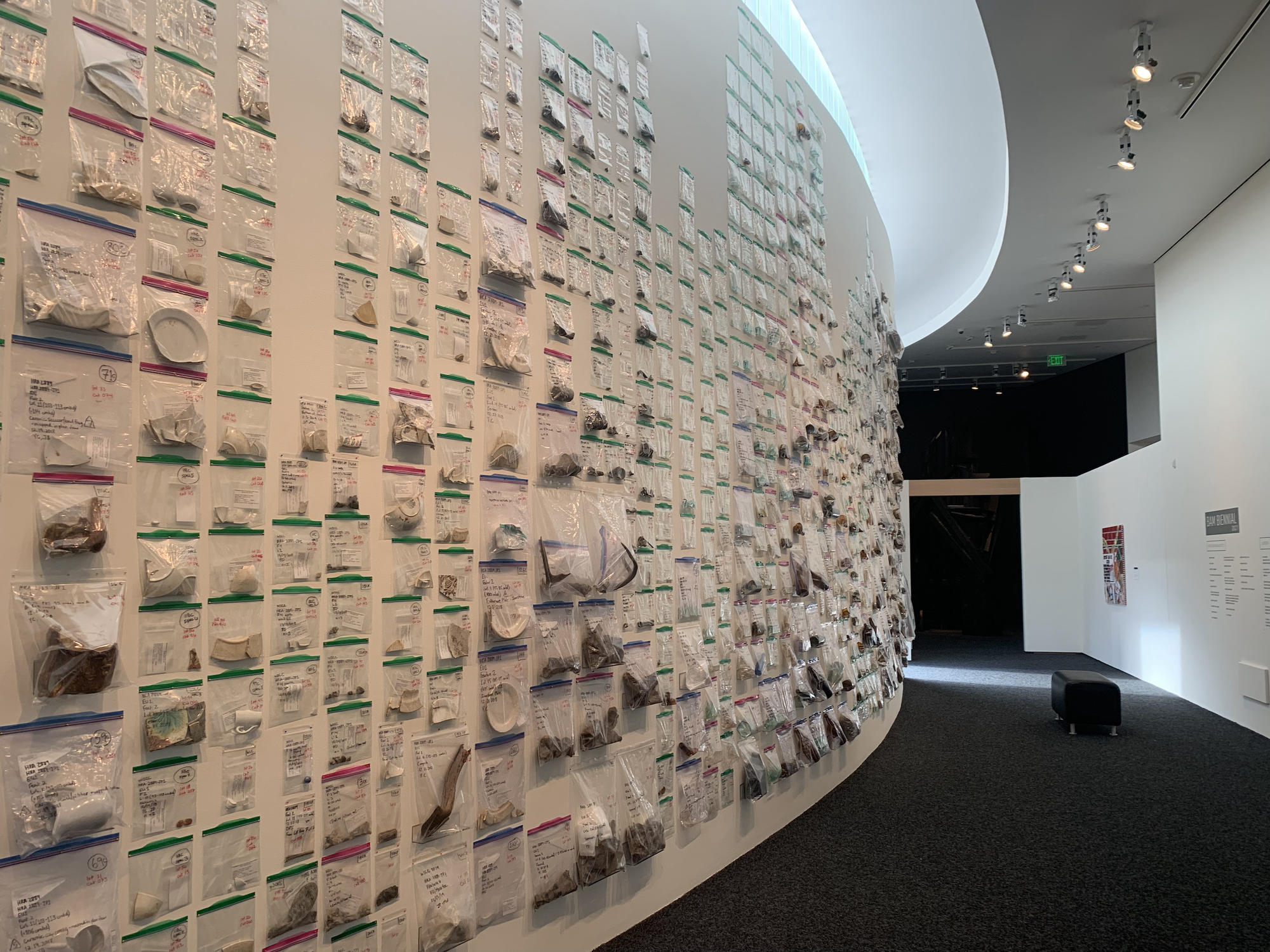
The “living wall” in Seattle’s Climate Pledge Arena contains 8,500 individual plants from 24 species. A team of gardeners takes care of the plants.Evan Bush / NBC News
Arena workers last spring abandoned plans to install natural gas to heat water, boil and dehumidify the rink, making it the first all-electric arena in North America, Johnson said.
Workers installed solar panels on the new atrium and a nearby garage, which Johnson says will provide an estimated 3-5 3 percent to 5 percent of the building’s energy needs.
The team bought two lithium-ion-powered Zambonis to refresh the ice, making it the second NHL franchise to have an electric ice-renewing machine, according to Doug Peters, a Zamboni sales director.
A renewable energy project planned by Seattle City Light will ultimately account for 100 percent of the remaining electricity consumption.
“We’re making sure the building stays carbon-free over time and we’re adding new renewable energies to the grid,” said Jason McLennan, a sustainability consultant who worked on the project.
The arena management group plans to apply for zero carbon certification from the International Living Future Institute, an organization for sustainable building, this coming October. An external auditor checks whether he meets the requirements.
According to an inventory of greenhouse gas sources, 37 percent of Seattle’s emissions come from building operations.
KeyArena, the facility’s predecessor, was responsible for more greenhouse gas emissions than any other urban building, said Sandra Mallory of the city’s Department of Sustainability and Environment. In its last full year of operation, the building ranked 111th in greenhouse gas emissions for all buildings in Seattle, according to city data.
Originally built for the 1962 World’s Fair, the Washington State Pavilion was later converted into the Climate Pledge Arena. The 41 million pound roof of the building is now considered a historic landmark.Courtesy of the Seattle Municipal Archives
“If you look at the construction industry in general, we didn’t move the needle fast enough,” said McLennan.
Local climate protectors, who are impressed by the building’s climate measures, hope that there will be impulses.
“When I first heard about it, it seemed very symbolic, but as I learned more about their operational and construction plans, it felt more significant,” said Deepa Sivarajan, Washington policy manager for a nonprofit group called Climate Solutions at pacific northwest. “We all need our buildings to get to this place.”
Crowd control
Perhaps the most ambitious plan is for the arena to offset the impact of its fans.
For every fan attending a concert, hockey competition, or basketball game, the arena buys carbon offsets to offset their travel and the food they eat. Employees track and compensate for how food and goods arrive at the facility. The compensatory amounts are used to finance environmental projects that aim to reduce emissions or remove carbon from the atmosphere.
Workers prepare the stage for a Coldplay concert at Seattle’s Climate Pledge Arena. The arena, which has two electric zambonis to refresh the ice for hockey games, does not use fossil fuels. Evan Bush / NBC News
Arithmetic remains a daunting task, Johnson said. The arena expects around 200 events annually with up to 18,300 visitors. The arena operators need to collect enough data – through fan surveys, parking space numbers and presence information – to calculate the CO2 costs of cheering the teams on.
Every Seattle Kraken ticket includes a bus pass that could help cut the carbon costs of transportation.
Johnson said the organization has neither a budget nor an estimate for the cost of offsets. The group’s carbon accounting will be released, he said.
And about the arena’s superficial tone: he hopes this will encourage people to think about their personal carbon footprint.